



Running a taxi business in the UK is increasingly becoming more difficult. Such cities as London or Manchester are overcrowded, have increased fuel prices and regulations such as ULEZ.
The conventional methods of dispatching, like making phone calls and manual booking is no longer sufficient. They hinder progress and result in missed opportunities.
In the modern world, taxis require quicker and more intelligent systems. This is where taxi dispatch software plays a key role. It aids in automating daily operations, enhances responsiveness, and more effectively manages fleets via real-time information.
- 2. What Is Taxi Dispatch Software?
- 3. Why Efficiency Is Critical for UK Taxi Fleets
- 4. Key Features of Modern Taxi Dispatch Systems
- 5. How Dispatch Software Improves Taxi Fleet Efficiency
- 6. Benefits for Large Taxi Fleets in the UK
- 7. Challenges Without Dispatch Software
- 8. The Future of Taxi Dispatch in the UK
- 9. Conclusion
- FAQs
2. What Is Taxi Dispatch Software?
A taxi dispatch software is a computerized program that assists the taxi companies in booking, drivers, and vehicles. It links passengers, drivers and fleet operators on one platform.
This system automates a lot of the daily activities including ride assignment, GPS tracking and communication. The software automatically matches the nearest available driver instead of calling drivers manually.
The majority of current taxi booking software is based on a cloud platform and has mobile apps to provide driver and customer services. It also has a dashboard to be used by admins to control operations.
This is the process of changing manual to digital and this assists taxi businesses to save time as well as enhance service quality.
3. Why Efficiency Is Critical for UK Taxi Fleets
Taxi businesses in the UK are highly concerned about efficiency. Such cities as London and Manchester have to struggle with congestion on roads that prolongs the time of travelling and the cost of fuel.
Besides that, regulations such as ULEZ (Ultra Low Emission Zone) cause an additional burden to the fleet operators. Ride-hailing apps provide real-time updates and are also a strong competitor to taxi companies, allowing fast booking.
Quick pickups, correct ETAs and seamless service are now expected by the customers. It is difficult to coordinate drivers, cars and reservations without relevant systems. This has a direct impact on profits and customer satisfaction.
This is why it is no longer optional to use taxi management software. It aids in the enhancement of work process, the decrease of delays, and the satisfaction of customers.
4. Key Features of Modern Taxi Dispatch Systems
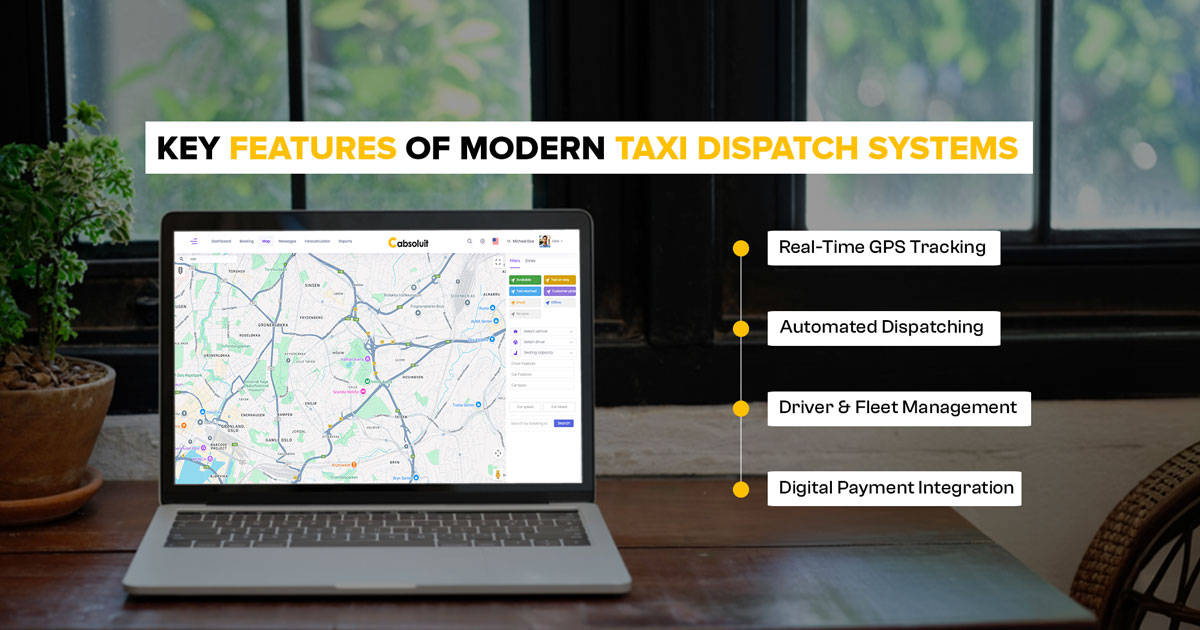
a. Real-Time GPS Tracking
The latest taxi dispatch systems are based on GPS tracking and have real-time monitoring of all the vehicles. This enables fleet managers to identify the location of the drivers at any time. It enhances visibility and enables fast decision making at the time of peak hours.
b. Automated Dispatching
In automated dispatching, a booking is allocated to the nearest available driver. This saves waiting time for passengers and enhances efficiency for drivers. It also eliminates manual coordination.
c. Route Optimization
The route optimization assists the drivers to avoid the traffic and select the quickest route. This saves time and fuel expenses. It also assists in making more visits per day, enhancing productivity.
d. Driver & Fleet Management
Taxi management software enables operators to monitor the performance of the drivers, the schedules, and the usage of the vehicles. This assists in planning better, and the fleet will run smoothly with no delays.
e. Digital Payment Integration
Contemporary systems are in favor of cashless payments, and booking is easy to the customers. It also assists the taxi companies to transact easily and enhances customer experience.
5. How Dispatch Software Improves Taxi Fleet Efficiency
Taxi dispatch software is important in enhancing the everyday activities of taxi companies. It assists in minimizing manual work and makes the entire system quicker and more trustworthy.
a. Operational Efficiency
With automation, there is less need for phone calls and manual booking. The system is real-time in terms of ride allocation, time saving and error reduction.
b. Cost Reduction
Dispatch software assists in lowering fuel expenses by employing improved routing and real-time monitoring. It also reduces the wastage of time, thus, vehicles devote more time in their journeys rather than waiting.
c. Better Driver Utilization
Ride requests are given to drivers depending on their location. This implies increased number of trips to be made by each driver and more efficient utilization of the fleet during the day.
d. Improved Customer Experience
Passengers enjoy quicker pickups and accurate ETAs. The service is more reliable and convenient because of real-time updates.
Lots of taxi companies in the UK are currently utilizing the latest taxi dispatch software such as Cabsoluit to handle bookings, to optimize routes and to better manage fleet operations.
6. Benefits for Large Taxi Fleets in the UK
In the case of big taxi fleets, dispatch software facilitates scaling. A single platform can manage all operations for fleets with 50 vehicles or more than 200.
A dashboard enables the fleet of managers to have central control over the fleet and to monitor drivers, bookings and cars in real time. This helps in making better and quicker decisions.
It also enhances the reliability of service whereby rides are allocated faster and delays are minimized. Generally, taxi management software can assist big fleets to operate efficiently and expand without falling out of control.
7. Challenges Without Dispatch Software
Taxi businesses suffer numerous problems without an appropriate dispatch system. Booking by hand can be full of errors and a waste of time. There is slowness and confusion in communication between drivers and operators.
The drivers can use inefficient routes, and this will raise fuel spending and time spent traveling. Such behavior translates to revenue loss and poor fleet performance.
There is also a longer waiting time and untrustworthy service to the customers, resulting in poor satisfaction. In the long run, these issues may impact the growth of business and competitiveness.
8. The Future of Taxi Dispatch in the UK
The UK taxi sector is increasingly becoming digital and data-driven in the future. AI-powered dispatch systems will assist in assigning rides more quickly and accurately.
An increasing trend towards electric cars is also present, primarily because of ULEZ and environmental regulations. Dispatching software will efficiently manage these fleets.
Smart city systems and real-time data will enhance traffic control and routing. Taxi companies will be increasingly dependent on automation and integrated platforms in the future to keep up with the competition.
9. Conclusion
Taxi dispatch software is no longer an option to the UK taxi businesses. It has become a requisite in the management of operations in a fast-moving market.
These systems enable businesses to grow and compete well by ensuring efficiency, cost reduction and better customer experience.
Early adoption of modern technology by taxi companies will put them at a better position to succeed. The correct tools can be very helpful for long-term success in the current market.