


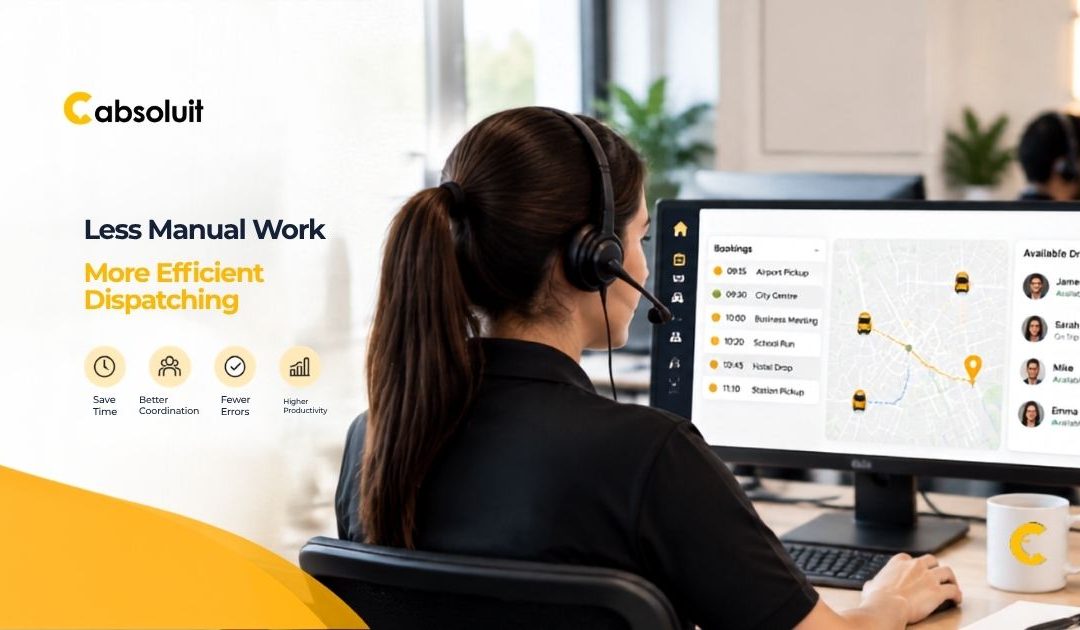
Manual dispatch can work well for small taxi businesses with a limited number of bookings and drivers. Many operators start by managing journeys through phone calls, spreadsheets, and direct communication with drivers.
However, as the business grows, these processes become harder to manage. Increasing bookings, more drivers, and higher customer expectations create operational challenges.
This is why many successful taxi companies are moving towards automated taxi dispatch software to improve efficiency, reduce errors, and manage daily operations more effectively.
- 1. Why Manual Dispatch Becomes Difficult as Taxi Businesses Grow
- 2. Lost Bookings and Revenue Opportunities with Manual Processes
- 3. Reducing Dispatcher Workload Through Automation
- 4. Improving Driver Coordination and Fleet Visibility
- 5. Scaling Taxi Operations Without Increasing Complexity
- 6. What Taxi Operators Should Look for When Moving to Dispatch Software
- Conclusion
- FAQs
1. Why Manual Dispatch Becomes Difficult as Taxi Businesses Grow
When a taxi business is starting, manual dispatch may seem simple and manageable. A dispatcher can answer customer calls, record booking details, contact available drivers, and update schedules manually.
However, as taxi operations expand, these processes become increasingly difficult to maintain.
Growing taxi companies often need to manage:
- Higher booking volumes
- More drivers and vehicles
- Multiple customer booking channels
- Increasing customer expectations
Modern passengers expect quick booking confirmations, accurate pickup details, and reliable service. Managing these expectations through manual processes can put extra pressure on dispatch teams.
Another challenge is managing multiple booking sources. Taxi operators may receive bookings through phone calls, websites, passenger apps, corporate accounts, and online booking platforms. When each booking source is managed separately, it becomes difficult to maintain a clear overview of daily operations.
Manual dispatch also creates a dependency on individual dispatchers. Important booking information, driver availability, and operational updates may rely heavily on one person’s knowledge. This can create problems when the workload increases or when quick decisions are required.
A taxi dispatch system helps solve these challenges by bringing bookings, drivers, vehicles, and operational information into one centralized platform. This gives operators better visibility and control over their daily activities.
2. Lost Bookings and Revenue Opportunities with Manual Processes
For every taxi business, bookings are the foundation of revenue. However, manual dispatch processes can create situations where potential bookings are missed or delayed.
Common challenges include:
- Missed customer calls during busy periods
- Slow booking responses
- Incorrect booking details
- Delays in confirming journeys
- Human errors during manual data entry
When customers cannot quickly book a ride or receive a response, they may choose another taxi provider. A missed booking is not only a lost journey; it can also mean losing a customer who may have returned in the future.
High-demand periods make this challenge even greater. When dispatchers are managing multiple calls and active journeys at the same time, maintaining accuracy becomes more difficult.
Taxi booking software helps operators capture more opportunities by creating a more organized booking process. Instead of depending only on phone communication, businesses can manage bookings digitally and keep all journey information available in one system.
Automated booking management allows taxi companies to handle higher volumes more efficiently while reducing the risk of missed opportunities.
3. Reducing Dispatcher Workload Through Automation

Dispatchers are responsible for keeping taxi operations running smoothly. However, many daily tasks involve repetitive manual work.
In a traditional dispatch environment, teams often spend significant time on:
- Checking driver availability
- Calling drivers individually
- Sharing booking information
- Updating journey records
- Managing changes manually
As a taxi fleet grows, these tasks consume more time and make it harder for dispatchers to focus on improving service quality.
Taxi dispatch software helps centralise booking and operational management through a single platform. Operators can manage incoming bookings, view driver availability, assign journeys, and monitor operations more efficiently.
Automation supports dispatch teams by reducing repetitive tasks and providing better information for decision-making. Instead of manually searching for available drivers, operators can quickly identify suitable resources based on availability and operational requirements.
The purpose of automation is not to replace dispatchers. It is to give them better tools to manage more bookings with less manual effort.
By adopting an automated dispatch system, taxi companies can improve workflow efficiency, reduce operational pressure, and create a stronger foundation for future growth.
4. Improving Driver Coordination and Fleet Visibility
As a taxi business grows, managing multiple drivers and vehicles becomes more complex. Keeping track of driver availability, active journeys, and booking assignments through phone calls or spreadsheets can create communication gaps between office teams and drivers.
Drivers need accurate journey information, while dispatch teams need visibility into vehicle status and trip progress. Without a connected system, updates may be delayed, leading to confusion and inefficient operations.
A modern taxi dispatch system improves coordination by connecting drivers, dispatchers, and customers through a central platform. With real-time driver status and journey visibility, operators can monitor active trips, check available drivers, and manage assignments more effectively.
A connected driver app also helps improve communication by allowing drivers to receive booking details, updates, and journey information directly. This reduces unnecessary calls between drivers and dispatch teams while creating a smoother workflow.
Better coordination allows taxi operators to improve response times, manage vehicles efficiently, and deliver a more reliable passenger experience.
5. Scaling Taxi Operations Without Increasing Complexity
Growth is the goal of every taxi business, but expansion also brings new operational challenges. Managing more bookings, adding vehicles, and coordinating additional drivers can quickly become difficult when relying on manual processes.
A system that works for a small fleet may not be effective when the business handles hundreds of daily journeys. More customers and more vehicles require better organisation, visibility, and control.
Digital dispatch systems help taxi operators scale by providing the tools needed to manage growing operations from one platform. Features such as automated booking management, driver assignment, real-time tracking, and operational reporting help businesses handle increased demand without creating unnecessary complexity.
Instead of increasing administrative workload every time the fleet grows, operators can use technology to create more efficient workflows.
A scalable taxi management software solution provides the foundation for businesses that want to expand while maintaining service quality and operational control.
6. What Taxi Operators Should Look for When Moving to Dispatch Software
Choosing the right taxi dispatch software is an important decision for operators looking to replace manual processes. The right system should not only solve current challenges but also support future business growth.
Key capabilities to consider include:
1. Booking Management
A reliable dispatch system should help operators manage bookings from different sources while keeping customer and journey information organised in one place.
2. Automated Dispatch and Driver Assignment
Automation helps operators assign suitable drivers more efficiently based on availability and operational requirements, reducing manual coordination.
3. Real-Time Tracking
Live vehicle tracking provides better visibility of active journeys, allowing operators to monitor fleet activity and respond quickly when needed.
4. Driver and Passenger Apps
A connected driver app and passenger app create a smoother experience by improving communication, simplifying bookings, and keeping users updated throughout the journey.
5. Reporting and Operational Insights
Reports and analytics help operators understand business performance, monitor fleet activity, and make better operational decisions based on real data.
By selecting software with these capabilities, taxi businesses can move from reactive manual management to a more organised and scalable operating model.
Conclusion
Manual dispatch may work when a taxi business is small, but it can become a limitation as operations grow. Increasing bookings, more drivers, and higher customer expectations require better tools for managing daily activities.
Automated taxi dispatch software helps operators improve efficiency, reduce operational errors, and create a scalable foundation for growth. By connecting bookings, drivers, vehicles, and customers in one system, taxi businesses can deliver a more reliable and professional service while preparing for future expansion.
FAQs
1. Why are taxi companies moving away from manual dispatch?
2. How does taxi dispatch software help operators?
3. Can dispatch software reduce missed bookings?
4. How does automated dispatch improve driver management?
5. What features should taxi dispatch software include?
Interested in learning more? Get in touch!
Please fill out the form below and we will get back to you shortly.