



In this expert guide, we reveal how the latest taxicab dispatch system is transforming urban mobility, streamlining fleet operations, and enhancing the customer experience for millions.
You will discover the evolution of dispatch technology, essential features, proven implementation strategies, the best platforms, and predictions for the future. Get ready to unlock the secrets behind future-ready taxi operations.
- The Evolution of Taxi Cab Dispatch Systems
- Core Features of a 2026 Taxicab Dispatch System
- Step-by-Step Guide to Implementing a Taxi Dispatch System in 2026
- Leading Taxi Dispatch Platforms in 2026
- The Business Impact and ROI of Modern Dispatch Systems
- Future Trends and Innovations in Taxicab Dispatch (2026 and Beyond)
- FAQs
The Evolution of Taxi Cab Dispatch Systems
The journey of the taxicab dispatch system is a story of rapid innovation, shaped by technology and shifting urban needs. From humble beginnings to the AI-powered platforms of today, evolution reflects a relentless drive for efficiency, reliability, and customer satisfaction.
From Manual Calls to AI-Driven Platforms
In the early days, the taxicab dispatch system relied on radio communication and manual logs. Dispatchers juggled incoming calls, recording ride details with pen and paper. The 2000s saw a digital leap, as computer-aided systems replaced paperwork, improving response times and accuracy.
By the 2020s, cloud-based and app-driven platforms emerged, enabling real-time tracking and instant ride matching. Automation became standard, with integrated dashboards providing a comprehensive view of fleet activity. To explore this transformation in depth, see the Evolution of Taxi Dispatching. This shift marked the end of fragmented processes and the dawn of connected intelligent dispatch.
Key Milestones in Dispatch Technology
Several breakthroughs have shaped the modern taxicab dispatch system. The introduction of GPS enabled precise vehicle tracking, while route optimization cuts travel time and fuel costs. Multi-channel booking via phone, app, and web broadened customer access.
Integration with secure payment gateways and regulatory compliance tools became essential, supporting both user convenience and legal requirements. A standout example: major urban fleets using smart dispatch reduced passenger wait times by 30 percent, demonstrating the tangible impact of technology upgrades.
Impact of Ride-Hailing Giants
The rise of ride-hailing giants like Uber, Lyft, and Bolt transformed expectations for the taxi cab dispatch system. Their innovations in app-based ride matching, dynamic pricing, and data analytics set up new benchmarks for the industry.
Local taxi operators responded by adopting white-label solutions to compete on equal footing. By 2023, 60 percent of taxi fleets in large cities had migrated to app-based dispatch, reflecting a widespread shift in operational models. The influence of these platforms continues to drive software innovation and customer-centric features.
Regulatory and Market Forces Shaping 2026
Regulatory and market dynamics now play a critical role in shaping the taxi system. Stricter compliance measures, such as MID-approved taximeters and adherence to GDPR, are mandatory for operators.
There is a growing demand for multi-language and cross-border capabilities, especially in cosmopolitan cities. The adoption of SaaS and pay-as-you-go models reflects a preference for flexibility and scalability. These forces ensure that dispatch technology remains agile and future-focused, ready to meet the evolving needs of both fleets and passengers.
Related Article: How Recurring Bookings Simplify UK School Run Taxi Services
Related Article: How Cabsoluit Automates School Runs with Advanced System
Core Features of a 2026 Taxicab Dispatch System
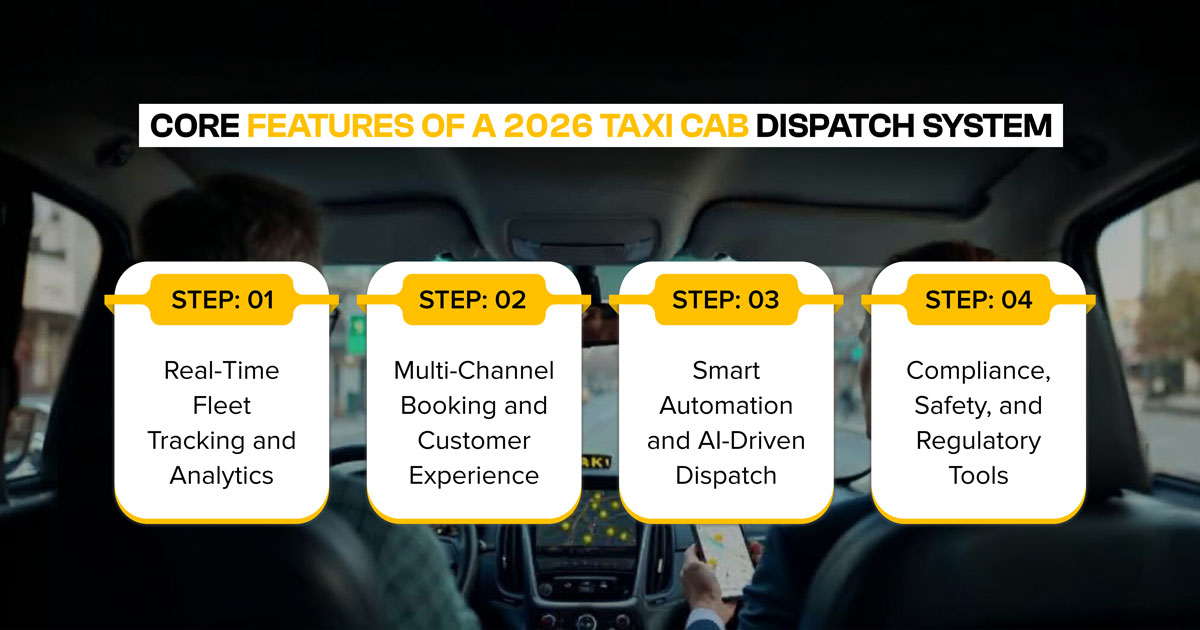
Real-Time Fleet Tracking and Analytics
Every taxi dispatch system in 2026 relies on live GPS tracking to monitor vehicle locations across the city. Dispatchers and managers gain instant visibility into fleet movements, helping them optimize driver assignments and reduce response times.
Sophisticated analytics dashboards present actionable insights, such as peak demand areas and driver performance trends. These features enable operators to make data-driven decisions quickly. For example, a heatmap might highlight neighborhoods with high booking rates, guiding strategic fleet deployment.
Automated reporting streamlines compliance and performance monitoring. Fleet operators can instantly access data on ride completion rates, average wait times, and more essential for maintaining service quality and efficiency.
Multi-Channel Booking and Customer Experience
Modern taxi dispatch system platforms deliver seamless ride bookings across multiple channels. Customers can request rides through mobile apps, web portals, phone calls, or even kiosks at hotels and airports.
Integration with third-party terminals, such as hospitality or travel hubs, expands booking opportunities beyond traditional apps. Leading fleets report that up to 40% of their bookings now originate from non-app channels, reflecting the need for versatile access.
To see a full breakdown of these multi-channel features and how they benefit operators, explore this Taxi Dispatch Software Features guide, which details the essential functions every operator should consider.
Smart Automation and AI-Driven Dispatch
Automation lies at the core of every advanced taxi dispatch system. AI algorithms analyze real-time data to assign drivers based on proximity, current traffic, and driver availability.
Demand prediction tools use historical and live data to forecast busy periods, enabling proactive resource allocation. Surge management features automatically adjust pricing and prioritize assignments during peak times, minimizing idle time for drivers.
These smart features not only boost operational efficiency but also support higher customer satisfaction by reducing wait times and ensuring prompt service.
Compliance, Safety, and Regulatory Tools
Regulatory compliance is non-negotiable for any dispatch software in 2026. Built-in modules support MID-approved taximeter integration, ensuring all fares are calculated legally and transparently.
Automated routes and fare calculations help drivers stay compliant with local regulations while simplifying their workflow. Passenger safety is prioritized through features like SOS buttons, live ride tracking, and instant alerts to dispatchers in case of emergencies.
These integrated tools give both operators and riders peace of mind, supporting a secure and compliant transportation environment.
Customization, Scalability, and White-Label Solutions
A flexible taxi dispatch system adapts to the unique needs of each fleet, from small local operators to large enterprise networks. Custom branding options allow companies to launch their own apps and platforms, reinforcing their market presence.
Modular architecture means features can be added or removed based on operational requirements. For example, a school-run module can be implemented for educational transportation, while multi-language support ensures accessibility for diverse communities.
With scalable cloud infrastructure, fleets can expand their operations confidently, knowing their dispatch system will grow alongside them.
Related Article: Why Taxi Booking Software is Crucial for UK Private Hire Operators
Related Article: The Role of Data Security in Your Taxi Business
Step-by-Step Guide to Implementing a Taxi Dispatch System in 2026
Implementing a modern taxi cab dispatch system in 2026 requires more than simply choosing software. It is a transformation journey that touches every area of fleet operations, from planning to scaling. Follow this expert, step-by-step guide to ensure a smooth transition and long-term success.
Assessing Your Fleet’s Needs and Readiness
Start by evaluating your current fleet operations. Consider the size of your fleet, your geographic service area, and the specific needs of your target customers. Are you serving urban commuters, airport travelers, or schools?
Identify existing pain points with your current software. Are manual processes causing delays? Is customer satisfaction low? Define your growth goals, such as reducing wait times or expanding service coverage.
Small fleets may prioritize ease of use and rapid deployment, while larger fleets often require scalability and integration with multiple services. This assessment forms the foundation for every decision that follows.
Choosing the Right Dispatch Software
Selecting the optimal taxi dispatch system software is critical. Compare cloud-based and on-premise solutions, weighing factors like scalability, regulatory compliance, and data security.
Most fleets in 2026 choose cloud-based platforms for their flexibility and automatic updates. Review vendor support, transparency in pricing, and the ability to customize features for your unique needs.
Data shows that 75% of new deployments now prefer cloud-based taxi dispatch system solutions. Take advantage of free trials or demos to test usability and feature fit before making a commitment.
System Setup and Integration
With your taxi dispatch system selected, focus on onboarding drivers and vehicles efficiently. Integrate the platform with your existing apps, payment gateways, and CRM tools to ensure a unified experience.
Set a clear rollout timeline, which varies by fleet size. Smaller operations may be living within days, while larger fleets could require a phased approach. Be proactive in addressing technical and operational challenges. For practical insights on common deployment obstacles and best practices, review Implementing Taxi Dispatch Solutions.
Document each integration step to avoid confusion and maintain system stability as you expand.
Training Staff and Drivers
Comprehensive training is essential for successful adoption of your taxi cab dispatch system. Provide user-friendly dashboards and mobile apps tailored to different roles, such as dispatchers, drivers, and administrators.
Offer structured training modules, including hands-on workshops and digital resources. Many platforms now include in-app tutorials that can reduce onboarding time by 50%. Encourage ongoing feedback and create a support channel for questions.
Well-trained teams can maximize the benefits of the taxi cab dispatch system, leading to higher efficiency and fewer errors.
Launching and Testing the Dispatch System
Begin your launch with a controlled beta test involving select drivers and dispatchers. Use this phase to gather real-time feedback and identify any technical or operational issues.
Focus on key performance indicators: ride completion rates, customer satisfaction, and system uptime. Make iterative improvements based on user input before expanding system access to your full fleet.
A gradual rollout of your taxi cab dispatch system reduces risk and helps build user confidence, ensuring a smoother transition for both staff and riders.
Ensuring Compliance and Data Security
Compliance is non-negotiable for any taxi cab dispatch system in 2026. Ensure your software meets GDPR and local data protection requirements. Choose secure cloud hosting with encrypted communications to protect passenger and driver data.
Automate compliance checks where possible, including fare calculation, route logging, and taximeter integration. By prioritizing security and regulatory adherence, you can avoid costly fines and safeguard your reputation.
Case studies show that fleets using automated compliance tools experience fewer incidents and greater peace of mind.
Continuous Improvement and Scaling
After launching, use analytics to optimize your dispatch software. Monitor performance metrics and customer feedback to identify areas for improvement.
As your business grows, upgrade features and add modules, such as multi-language support or custom booking channels. Modular platforms allow small fleets to scale up without disruption, maintaining service quality as demand increases.
Commit to regular system reviews and stay informed about industry innovations to keep your system future ready.
Related Article: Cabsoluit Driver App: Simplify Your Taxi Operations.
Related Article: 5 ways to Improve Your Taxi Industry for the Future – 2026 Guide
Leading Taxi Dispatch Platforms in 2026
The cab dispatch system market in 2026 is more competitive and dynamic than ever. Operators can now choose from a wide array of SaaS and proprietary solutions, each offering unique advantages. The continued rise of white-label and modular platforms reflects the growing demand for customization and scalability. According to recent industry analysis, leading providers now account for over 70% of urban fleet deployments. For a deeper look at how AI and IoT technologies are shaping operational efficiency and market expansion, see AI and IoT in Taxi Dispatch.
Cabsoluit: Cloud-Based, Scalable Taxi Dispatch Solution
Cabsoluit has emerged as a market leader for fleets seeking a future-proof taxi dispatch system. Its white-label, cloud-based platform supports businesses of all sizes, from local operators to enterprise-scale fleets. Cabsoluit offers seamless multi-channel booking, robust analytics, and built-in compliance tools. The platform’s branded apps help companies stand out, while pay-as-you-go pricing keeps it accessible. With rapid deployment, multi-language support, and regulatory features, Cabsoluit addresses the evolving needs of taxi companies, ride-hailing startups, and even schools requiring custom solutions.
Other Notable Platforms and Their Unique Offerings
Several other top platforms set the standard for the modern taxi cab dispatch system. For example, iCabbi is recognized for its powerful AI-driven dispatch and flexible integration with payment systems. Autocab stands out with its advanced booking engine and automated compliance features, making it ideal for large fleets. Meanwhile, TaxiCaller offers an intuitive interface and global reach, supporting operators in over 60 countries. The table below summarizes key differences:
The cab dispatch system market in 2026 is more competitive and dynamic than ever. Operators can now choose from a wide array of SaaS and proprietary solutions, each offering unique advantages. The continued rise of white-label and modular platforms reflects the growing demand for customization and scalability. According to recent industry analysis, leading providers now account for over 70% of urban fleet deployments. For a deeper look at how AI and IoT technologies are shaping operational efficiency and market expansion, see AI and IoT in Taxi Dispatch.
Cabsoluit: Cloud-Based, Scalable Taxi Dispatch Solution
Cabsoluit has emerged as a market leader for fleets seeking a future-proof taxi dispatch system. Its white-label, cloud-based platform supports businesses of all sizes, from local operators to enterprise-scale fleets. Cabsoluit offers seamless multi-channel booking, robust analytics, and built-in compliance tools. The platform’s branded apps help companies stand out, while pay-as-you-go pricing keeps it accessible. With rapid deployment, multi-language support, and regulatory features, Cabsoluit addresses the evolving needs of taxi companies, ride-hailing startups, and even schools requiring custom solutions.
Other Notable Platforms and Their Unique Offerings
Several other top platforms set the standard for the modern taxi cab dispatch system. For example, iCabbi is recognized for its powerful AI-driven dispatch and flexible integration with payment systems. Autocab stands out with its advanced booking engine and automated compliance features, making it ideal for large fleets. Meanwhile, TaxiCaller offers an intuitive interface and global reach, supporting operators in over 60 countries. The table below summarizes key differences:
| Platform | Strengths | Ideal For |
|---|---|---|
| iCabbi | AI dispatch, integrations | Large urban fleets |
| Autocab | Compliance, booking engine | Enterprise fleets |
| TaxiCaller | User-friendly, global reach | SMEs, startups |
How to Choose the Best Platform for Your Business
Selecting the right taxi dispatch system requires careful assessment of your fleet’s needs. Start by evaluating feature fit, scalability, and quality of vendor support. Trial periods and transparent pricing are essential for making informed decisions. Use this checklist to guide your selection:
- Does the platform support multi-channel bookings?
- Are compliance and safety tools built?
- Is the system scalable for growth?
- Does it offer analytics and reporting features?
- How responsive is customer support?
A well-chosen platform will empower your business to thrive in the evolving urban mobility landscape.
The Business Impact and ROI of Modern Dispatch Systems
Modern dispatch system adoption is not just about technology, it is about measurable business transformation. For taxi operators and fleet managers, the shift to advanced dispatch platforms in 2026 brings tangible financial returns, improved customer loyalty, and a competitive edge in a rapidly evolving market.
Operational Efficiency and Cost Savings
A next generation taxicab dispatch system streamlines daily operations, reducing reliance on manual processes and minimizing call center workload. Sophisticated route optimization tools save both fuel and time, directly impacting the bottom line.
For instance, a medium-sized fleet implementing an advanced taxi cab dispatch system reported a 15% reduction in operational costs within the first year. Automated scheduling, real-time vehicle allocation, and integrated payment processing all contribute to these savings.
| Benefit | Impact (%) | Example Result |
|---|---|---|
| Reduced idle time | 20 | More rides per shift |
| Lower call center costs | 20 | Fewer manual bookings |
| Fuel savings | 12 | Optimized routing |
These improvements quickly translate into higher profit margins.
Enhanced Customer Experience and Retention
Customer expectations in 2026 are higher than ever, and a robust taxi dispatch software meets these demands head-on. With faster response times, accurate ETAs, and seamless in-app features, fleets can dramatically improve user satisfaction.
Features like instant ride tracking, in-app ratings, and loyalty programs encourage repeat business. Data shows that fleets leveraging a taxicab dispatch system with customer-centric tools see up to a 25% increase in repeat bookings.
Satisfied customers are more likely to recommend services, strengthening brand reputation and market share. Positive experiences foster long-term loyalty in a competitive landscape.
Data-Driven Decision Making and Analytics
Access to real-time analytics is a game changer for taxi operators. A modern taxicab dispatch system provides actionable insights on fleet performance, demand patterns, and compliance needs.
Fleet managers use automated reports and dashboards to identify peak demand zones, monitor driver productivity, and optimize resource allocation. For more on how AI is enhancing these capabilities, see AI in Fleet Management.
With these data-driven tools, businesses can confidently expand into new service areas, adjust marketing strategies, and maintain regulatory compliance. The result is smarter growth and sustained profitability.
Scalability and Future-Proofing Operations
A scalable taxi cab dispatch system enables fleets to grow seamlessly, whether expanding to new cities or adding new vehicle types. Cloud-based platforms support rapid onboarding, modular upgrades, and real-time feature enhancements.
Operators can easily launch new services, such as electric vehicle rides or multi-language support, to meet changing market demands. Future-proofing is built in, allowing the taxi cab dispatch system to adapt as technology and regulations evolve.
This flexibility ensures minimal disruption during periods of growth, positioning operators ahead of less agile competitors.
Competitive Advantage in the Mobility Market
In a crowded marketplace, differentiation is crucial. A modern software empowers fleets with branded apps, advanced automation, and the ability to respond swiftly to regulatory shifts.
Industry leaders recognize the value of innovation. For example, as companies like Uber prepare to launch autonomous taxi services, traditional fleets equipped with the latest dispatch technology can maintain relevance and compete effectively. For more on these advancements, see Uber’s Autonomous Taxi Plans.
Statistics show that 80% of top-performing fleets leverage a modern taxi cab dispatch system for these strategic advantages. This edge drives both short-term gains and long-term sustainability.
Future Trends and Innovations in Taxicab Dispatch (2026 and Beyond)
Urban mobility is on the brink of a transformation, powered by next-generation technology. The taxi cab dispatch system of 2026 is not just keeping pace, it is setting new standards for efficiency, intelligence, and flexibility. Let us explore the game-changing trends that will define the future of dispatch.
AI, Machine Learning, and Predictive Dispatch
Artificial intelligence is at the heart of the 2026 taxi cab dispatch system. These platforms now use sophisticated machine learning models to forecast demand, optimize routes, and assign drivers in real time. Predictive dispatch reduces passenger wait times by up to 35 percent, as drivers are automatically positioned where they are needed most.
Platforms harness historical data and live city feeds to make dynamic decisions. For example, surge pricing and proactive driver allocation can be managed without human intervention, increasing both driver earnings and customer satisfaction. The benefits of AI-driven optimization can be explored in depth in the AI in Ride-Hailing Platforms study, which analyzes how intelligent algorithms enhance efficiency and reduce customer abandonment.
As a result, the dispatch system is becoming more responsive, adaptive, and profitable for operators.
Integration with Smart Cities and IoT
The taxicab dispatch system is evolving alongside the rise of smart cities. IoT devices embedded in vehicles and streets provide real-time data on traffic, road conditions, and fleet health. Dispatch software taps into these networks to make smarter routing decisions and ensure passenger safety.
Key features include:
- Real-time integration with city traffic management
- Automated vehicle diagnostics and maintenance alerts
- Passenger safety monitoring through connected sensors
With half of large cities piloting such integrations, fleets benefit from reduced congestion, faster pickups, and safer journeys. The taxi cab dispatch system becomes a seamless part of urban infrastructure, supporting both drivers and city planners.
Sustainability and Green Mobility Initiatives
Sustainability is a top priority for every modern taxi cab dispatch system. Operators are increasingly adding electric and hybrid vehicles to their fleets, and dispatch platforms help optimize these assets for maximum efficiency.
Key sustainability advancements include:
- Carbon tracking and emissions reporting
- Eco-friendly ride options for passengers
- Intelligent EV charging schedules based on demand data
For example, some fleets use dispatch data to plan charging stops, ensuring vehicles are always available without unnecessary downtime. As cities push for greener mobility, the taxi cab dispatch system empowers operators to meet regulatory goals and attract environmentally conscious riders.
The Rise of Autonomous and Mixed-Mode Fleets
Looking ahead, the taxi system will support not only human-driven vehicles but also autonomous and mixed-mode fleets. Dispatch platforms are designed to integrate seamlessly with self-driving taxis, shuttles, and micro-mobility options like e-scooters and bikes.
Emerging trends highlighted in Future Transport Trends 2026 point to a future where fleets must adapt to regulatory changes and new mobility models. The dispatch system will need to coordinate across multiple vehicle types, manage compliance, and support cross-border operations.
This flexibility ensures that the taxicab dispatch system remains at the center of urban mobility, ready for whatever the future brings.