


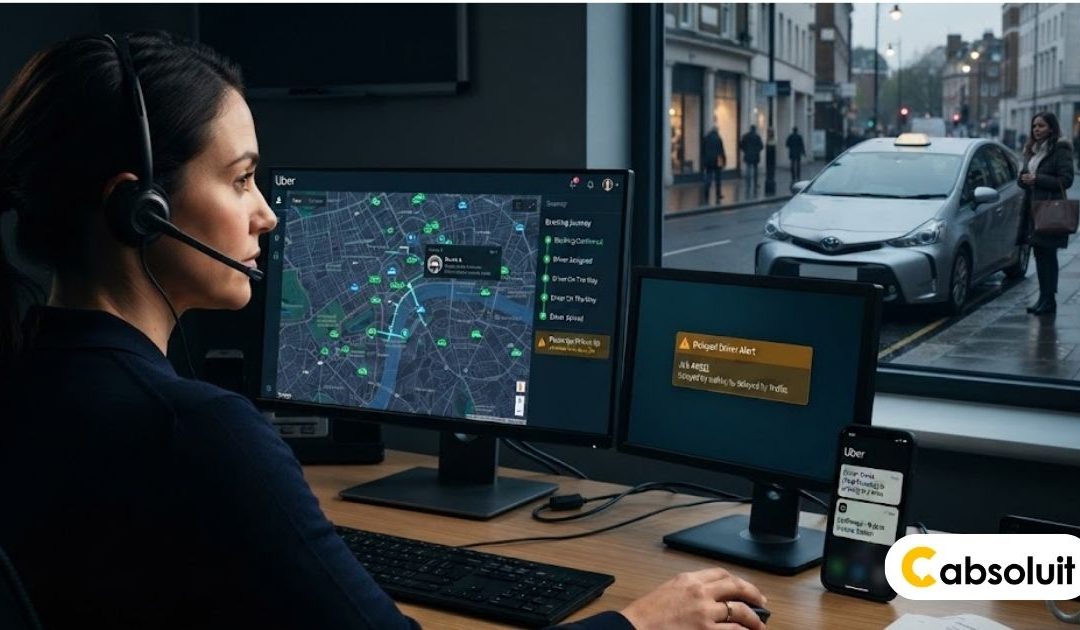
A missed booking is more than a lost fare. It can also mean an unhappy passenger and a customer who may not call again.
Bookings are missed when a request is not captured; details are wrong, a driver is not assigned, or someone does not arrive. Better access, communication, allocation, and fleet visibility can prevent these failures.
- What Counts as Missed Booking in a Taxi Business?
- 1. Give Customers More Than One Way to Book
- 2. Bring Every Booking Channel into One Dashboard
- 3. Capture Complete Booking Details the First Time
- 4. Send Instant Confirmations and Useful Updates
- 5. Automate Driver Allocation but Keep Human Control
- 6. Monitor the Booking Until Pickup
- 7. Automate Advance and Recurring Journeys
- 8. Match Driver Availability with Peak Demand
- 9. Reduce Passenger No-Shows with Clear Policies
- 10. Record Why Each Booking Was Missed
- A Simple Weekly Missed-Booking Audit
- Protect Every Booking from Request to Pickup
- FAQs
What Counts as Missed Booking in a Taxi Business?
An unanswered call is only one type. A website request may be left unseen. A confirmed ride may remain unassigned. A driver may receive the wrong pickup details. A regular journey may not reach the schedule.
Operators should record missed enquiries, unassigned jobs, cancellations and no-shows separately. Each problem has a different cause and needs a different fix.
1. Give Customers More Than One Way to Book
A phone-only service can lose bookings when lines are busy or the office is closed. Let passengers' book by phone, website, passenger app, WhatsApp or a corporate booking portal.
This multi-channel booking approach gives customers more choice and keeps booking open around the clock.
2. Bring Every Booking Channel into One Dashboard
More channels can create more work if staff must check each one separately. A WhatsApp message can be missed while the dispatcher answers the phone.
Use one taxi dispatch dashboard for all booking sources. This gives the team one live list of new, confirmed, assigned, and completed jobs. It also reduces duplicate entry and missed messages.
3. Capture Complete Booking Details the First Time
Small errors can cause failed pickups. Record the pickup point, destination, date, time, contact number, passenger count and vehicle type.
Also collect luggage, accessibility and special pickup needs. Airport bookings should include the flight number. Map tools and address checks can reduce location errors.
UK private hire operators should check official guidance because council booking-record rules can vary.
4. Send Instant Confirmations and Useful Updates
Passengers should know that their booking has been received. Send an instant confirmation with the pickup time, address, fare details, and booking reference.
Send updates when a driver is assigned, on the way and nearby. An advance reminder lets the passenger confirm, change or cancel. Cabsoluit’s web booking system supports confirmations and ride-status notifications.
5. Automate Driver Allocation but Keep Human Control
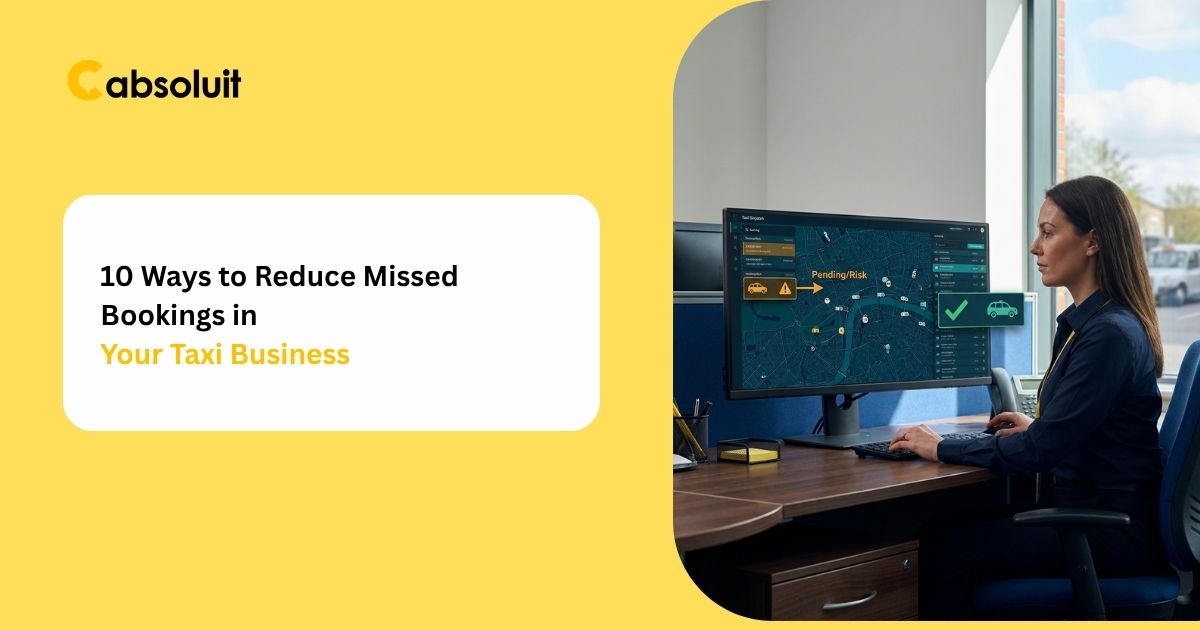
Calling drivers one by one takes time during peak hours. An automated taxi dispatch system can offer the job to a suitable nearby driver much faster.
Set a cutoff for unassigned advance bookings. If a driver rejects a job, reassign it quickly. Automation handles routine work, while people manage airport pickups, accessibility needs and other exceptions.
6. Monitor the Booking Until Pickup
A booking is not safe just because a driver accepted it. Track each job through clear stages: assigned, accepted, on the way, arrived, passenger picked up and completed.
Real-time vehicle tracking helps dispatchers spot a late or stationary driver early. They can contact the driver, send another vehicle or update the passenger before the trip fails.
7. Automate Advance and Recurring Journeys
School runs, staff transport, healthcare trips and corporate journeys often repeat. Entering them by hand every day creates avoidable errors.
Use recurring booking management to set days, times, notes and vehicle need once. Add holiday exclusions. Dispatchers then manage changes instead of rebuilding the schedule.
8. Match Driver Availability with Peak Demand
Some missed bookings are capacity problems. Review booking volumes by hour, day, zone and vehicle type. Compare this with driver availability, acceptance rates and cancellations.
Use taxi fleet analytics to plan coverage before Friday evenings, school runs, events and airport peaks. Good planning puts suitable drivers where demand appears.
9. Reduce Passenger No-Shows with Clear Policies
Send reminders for advance journeys and make cancellations or rescheduling simple. Clear waiting-time and cancellation terms help passengers understand what is expected.
For high-value or large-group bookings, consider a clearly disclosed deposit or prepayment. The goal is not punishment. It is to release the driver early enough to take another job.
10. Record Why Each Booking Was Missed
Do not place every failed trip under “cancelled.” Use clear reason codes, such as unanswered enquiry, incomplete details, no driver available, driver rejected, late driver, passenger no-show or system issues.
Track unassigned jobs, driver acceptance, on-time pickups, no-shows, cancellations and recovered bookings. Review them by channel, time and zone to find where revenue is leaking.
A Simple Weekly Missed-Booking Audit
Each week, the list declined, cancelled, unassigned and late jobs. Give each one a reason. Find out where most failures occur.
Make one change, such as adding peak-hour drivers or setting up an alert. Check the same measure next week. Small improvements are easier to measure.
Protect Every Booking from Request to Pickup
Reducing missed bookings takes more than answering calls faster. Taxi operators need connected booking channels, accurate details, quick driver allocation, live trip visibility, and useful reports.
Cabsoluit brings bookings, dispatch, driver tracking, recurring journeys and reporting into one cloud system. Book a free demo to reduce manual work and manage bookings with confidence.
FAQs
Common causes include unanswered enquiries, incomplete booking details, disconnected booking channels, slow driver allocation, poor communication and driver or passenger no-shows.
It puts bookings, drivers and vehicles in one system. Faster allocation, automatic updates, live tracking, and clear statuses help dispatchers act before a job fails.
Send immediate confirmations and timely reminders. Provide clear driver-arrival updates and make it easy for passengers to cancel or reschedule when their plans change.
Track unassigned bookings, driver acceptance, on-time pickups, cancellations, passenger no-shows, driver no-shows, and booking recovery. Review each measure by channel, time and service zone.
Yes. A central taxi booking and dispatch system can manage bookings, automate driver allocation and send passenger updates. This helps a small team handle more journeys without increasing manual work.
Interested in learning more? Get in touch!
Please fill out the form below and we will get back to you shortly.