


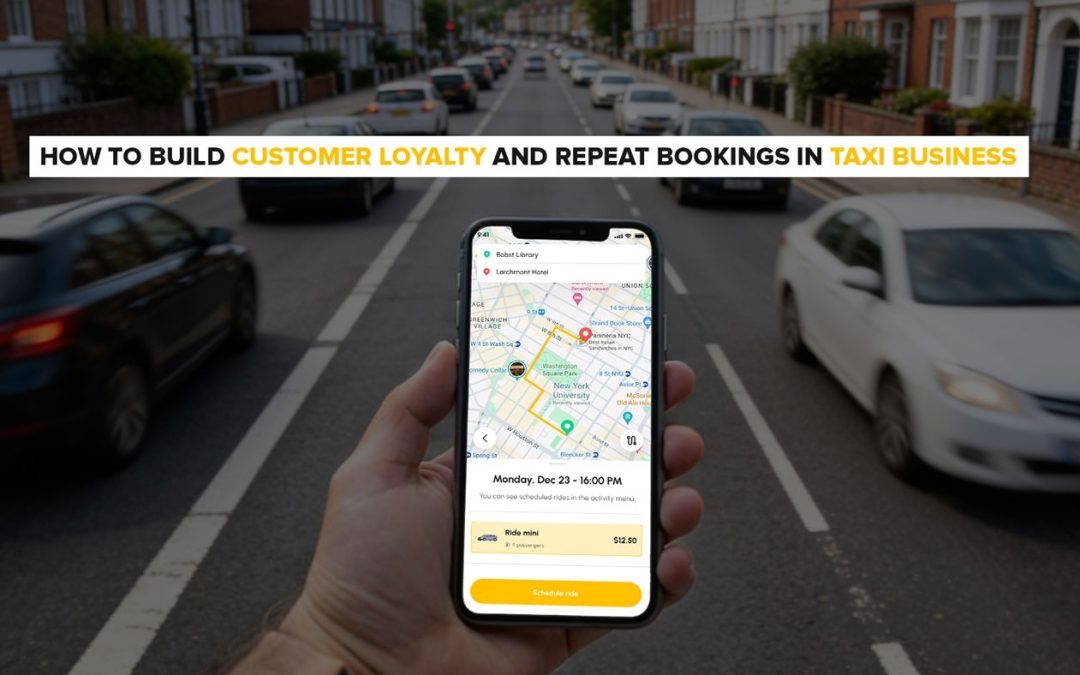
Recurrent bookings assist in stabilizing income and reducing marketing expenses. Maintaining customers is economical compared to the cost of acquiring new ones. Discounts are not enough to create loyalty. It is the result of regular service, easy reservations, and stability.
Taxi companies which are concerned with consistency are trusted. Customers will revisit the service that they have trusted.
- What Makes Customers Return to the Same Taxi Company
- Where Taxi Businesses Lose Customer Loyalty
- Using Taxi Dispatch Software to Improve Customer Experience
- How Automation Drives Repeat Bookings
- Role of Mobile Apps in Building Customer Loyalty
- Fleet and Driver Management Impact on Loyalty
- Using Data and Dashboard Insights to Retain Customers
- Why Cloud-Based Taxi Software Supports Long-Term Loyalty
- How Taxi Businesses Can Turn First-Time Riders into Regulars
- Conclusion
- FAQs
What Makes Customers Return to the Same Taxi Company
Customers come back when the booking process is fast and easy. Their slowness or long forms drive them away. The easy flow of booking will save time and create a first impression.
Pickups on time are also important. Customers want their visits to be scheduled. Slow pace causes a lack of trust and makes them switch companies in future.
It is also important to have clear communication both prior to and throughout the trip. The information via a customer app will make the customers feel updated. Customers will continue to book again when there is a short booking time, and service has been trusted and is reliable.
Where Taxi Businesses Lose Customer Loyalty
Taxi companies tend to lose customers whenever they miss or get late appointments. The customers want prompt confirmation. Once that fails to occur, trust is lost in a short time.
Manual dispatch is another issue. Delays in responding and disrelated dispatch software to create service loopholes. Employees waste more time in repairing problems rather than attending to the customers.
Unstable driver experience is detrimental to loyalty as well. A bad ride after a good one is the confidence to destroy. Lack of follow up following the visit leaves the customers feeling disregarded. These problems enhance the cost of operation and force customers to seek alternatives.
Using Taxi Dispatch Software to Improve Customer Experience
Taxi dispatch software assists in enhancing the way customers go about their booking. A dispatch system is centralized enabling the teams to respond better and handle the requests at a single location. This minimizes waste of time and lost bookings.
Automation plays a key role. Online booking reduces manpower and maintains trip information. Live dispatch assists drivers to arrive at pickups in time and deliver according to the customers expectations.
This is enhanced by better coordination between the drivers and the office, which ensures that the operations run smoothly. Whenever it all combines, customers will feel the difference and will most likely come back.
How Automation Drives Repeat Bookings
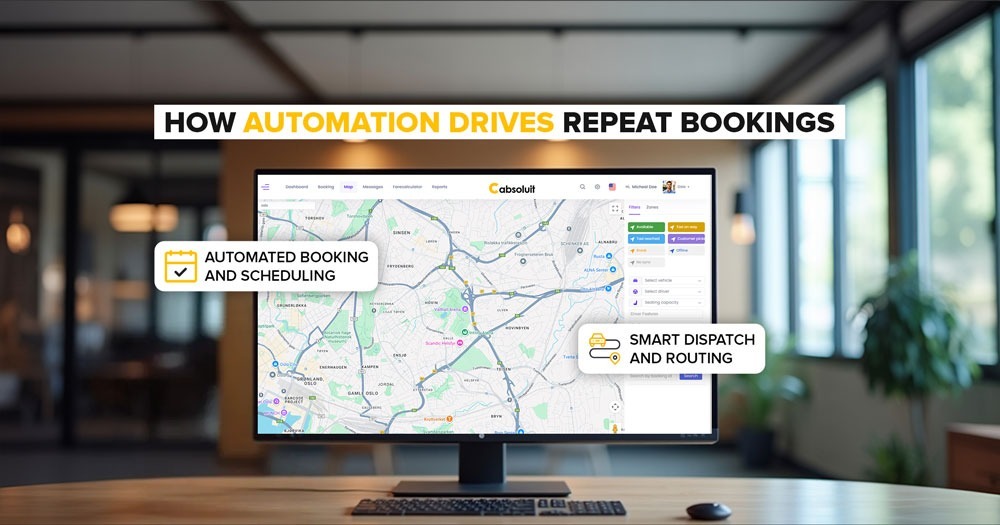
1. Automated Booking and Scheduling
Booking is done automatically and saves time. Customers receive fast service without manual screening. Regular riders are supported through advance and repeat bookings which are managed with ease.
Taxi booking software will ensure that staff members do not depend on manual procedures as much as they use to make booking errors.
2. Smart Dispatch and Routing
Location-based dispatching enhances the assignment of drivers. GPS and navigation provide effective navigation even in rush hours. A decrease in waiting time leads to a positive experience and the customer will be willing to make another booking.
Role of Mobile Apps in Building Customer Loyalty
Customers are interacting with a taxi business through mobile apps. Repeat bookings can be made easily and quickly through a passenger app. Details are not required to be entered every time by the customers.
A driver’s application facilitates synchronous changes and less stressful interactions. Drivers get trip information effectively and in time. This lessens the delays and confusion.
Trust is created through real-time tracking. The customer will be able to know the location of his or her ride and be more confident. It is also important to have a plain interface. Customers tend to come back more in case the white label taxi application is user-friendly.
Fleet and Driver Management Impact on Loyalty
The management of fleet and drivers has a direct influence on customer experience. A properly operating fleet decreases time wastage and lost pickups. Service remains stable when the vehicles are on the road and monitored.
Fleet management software assists in tracking vehicles in real time. This helps in planning and response to high times. The availability of drivers is also an issue. Customers have fewer wait times when there is enough number of drivers.
The fleet operations are consistent, which results in consistent service. Customers develop trust when they are accorded the same grade of service in all the vehicles and motorist and this then leads to repeat booking.
Using Data and Dashboard Insights to Retain Customers
The information assists taxi firms to learn what their customers do in reality. The booking history and repeat customers are provided on a dashboard. This is useful in making teams concentrate on service, which brings repeat customers.
Planning the operations can be improved by monitoring the peak days and times of bookings. When there is high demand, more vehicles and drivers can be on the road. This minimizes the time wastage and misses journeys.
The application of actual patterns of use on the platform enables companies to enhance the quality of services. The improved decision-making results in more efficient operation and customer retention.
Why Cloud-Based Taxi Software Supports Long-Term Loyalty
Taxi businesses remain reliable in the long run with the assistance of a cloud-based platform. The requirement of 24/7 is fulfilled through stable system access. Customers are confident in services that do not have downtime.
The apps and APIs can also be easily integrated with cloud systems. This ensures that bookings, dispatching and updates are kept in touch. Larger the number of bookings, the bigger the software, yet the software does not slow down the operations.
Stability in terms of performance between sites is important in expanding businesses. Customers become assured and make another booking when the service is continuously good in all the locations.
How Taxi Businesses Can Turn First-Time Riders into Regulars
Taxis enterprises can convert first-time riders to regular customers by concentrating on basics that are well delivered. Quick reservation and sure shipment create the appropriate initial impression. Customers become sure when the bookings are completed in a short time.
Communicating effectively prior to picking up will minimize uncertainty. A smooth and professional ride is important. On time, service and clean vehicles create trust.
With the initial visit, it is followed by the repeating booking process that is easy to follow. On the occasion that customers can find it easy to book again, chances of returning are high.
Conclusion
Trust and reliability lead to repeat bookings and not first-time deals. Whenever customers are assured that they will receive smooth service, they will revisit. Stability in operations is important in the development of confidence.
Technology assists taxi companies to remain organized and receptive. It assists teams to provide equal quality service on each trip. Customer loyalty and long-term growth is achieved through taxi business that is concerned with stable operations.