

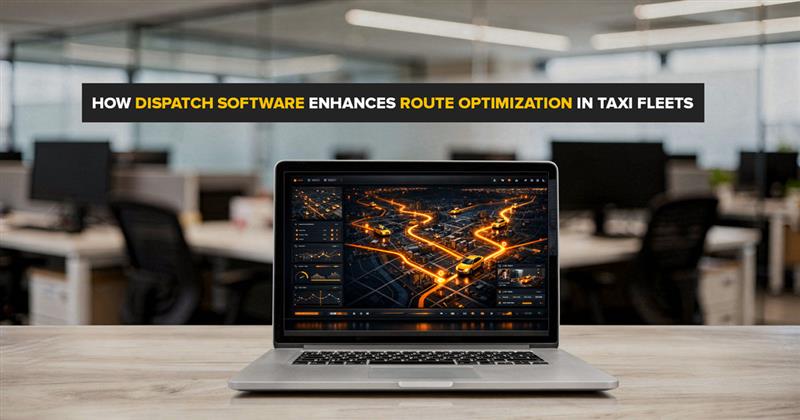
The customer becomes unhappy as well as increases your costs when the driver gets stuck in a jam. It is here that route optimization turns everything around. Smart dispatch software then does the work instead of drivers making guesses as to the best route.
This is a technology that identifies the most efficient solution to making movement between points. It saves businesses time, reduces their expenses, and makes their customers smile.
We will demonstrate in this guide how the use of modern tools will help you create a smooth operation in a messy schedule.
2. What Is Route Optimization in Dispatch Systems?
Put simply, route optimization is the act of determining the most optimal route to use in a trip. It is not only concerning the shortest distance. Optimization software takes GPS position and up to date traffic data to view what roads are congested.
Then, smart algorithms are used to compute the fastest way to travel on each trip. The aim is to identify the most effective route to reach all passengers. This technology will ensure your businesses keep moving even when there is a lot of traffic on the road.
3. Keyways Dispatch Software Enhances Route Optimization
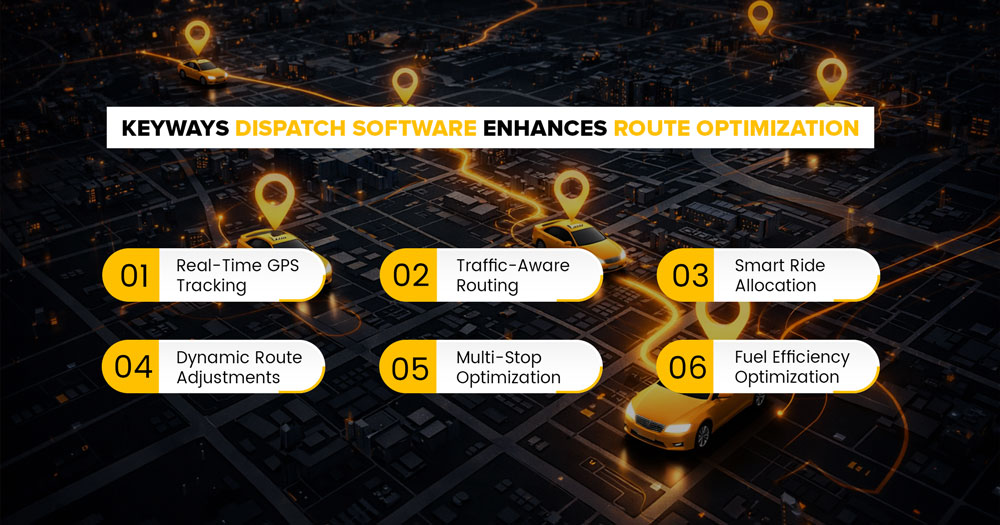
It examines thousands of pieces of data in one second to identify the optimal route of each car. The following are the key areas in which this technology can ensure your operations are more efficient.
a. Real-Time GPS Tracking
The initial action of any good optimization software is knowing where all the people are. Live GPS tracking will make you view the position of all the drivers on a live map.
The system will locate the closest driver immediately after a new booking is received. This will save a lot on dead mileage and will assist you in reducing the cost that you are unaware of.
b. Traffic-Aware Routing
The greatest advantage of a taxi business is traffic. The intelligent process takes advantage of live traffic information to identify accidents or road construction before your driver gets stuck in the traffic jam.
The software is then used to recommend an improved route to prevent delays. This will ensure that your ETAs are much closer, and your customers remain happy.
c. Smart Ride Allocation
The optimization software automatically picks the drivers instead of a dispatcher having to pick the drivers manually. It allocates trips according to distance and the one who is completing work soon.
This intelligent matching will see that drivers do not have to drive across town to fetch a small commission and your fleet is more efficient.
d. Dynamic Route Adjustments
The roads may shut and the plans may shift overnight. When a roadblock is detected on the road, the routes are updated automatically, and new paths are sent to the driver’s device.
It is also useful in the case of customer cancelation, as the driver does not have to waste even a single mile.
e. Multi-Stop Optimization
It is not an easy task to cope with multiple-stop trips. The optimization software computes the optimal order of all the stops in case of common rides or school runs.
This ensures that it does not go in zigzag and serves as an important guide in businesses that would wish to enjoy the maximum of their fleet at the peak times.
f. Fuel Efficiency Optimization
Each additional mile that a motorist covers costs you. Your cars will take less time in traffic jams because you are using the shortest routes.
Shorter and smarter journeys mean fewer fuel burnt up and a large reduction in your daily expenses.
4. Real-World Application in Taxi Fleets
The use of guesswork is no longer applicable in modern taxi businesses. On the contrary, they adopt integrated dispatch systems to operate their whole operation with one dashboard.
These systems are live-map-data-analytic-smart-automation integrations to manage thousands of trips simultaneously. With all these tools, fleet owners will be able to know the precise position of all cars and how much they are consuming.
Indicatively, a good number of taxi operators are using sophisticated dispatch systems such as Cabsoluit to plan routes and minimize idle time and overall efficiency of the fleet.
It is a high-level process, which enables even small businesses to compete with international ride-sharing giants to offer faster and reliable service.
5. Benefits of Route Optimization for Taxi Businesses
When you use a smart process to plan your routes, your whole business changes. It is not just about moving cars; it is about making every mile count. Here are the biggest wins for your fleet:
- Lower operational costs: You spend less on gas and car repairs.
- Better driver utilization: Your drivers spend more time with passengers and less time waiting.
- Faster service delivery: Customers get to their destinations much quicker.
- Improved customer satisfaction: Happy riders come back and tell their friends.
- Higher revenue potential: More efficient trips mean you can handle more bookings every day.
By focusing on these areas, businesses can turn a small fleet into a highly profitable operation.
6. Challenges Without Route Optimization
A taxi business has numerous challenges without suitable guides or software. Manual planning can result in enormous fuel wastage and an increase in trip time. Drivers may find themselves stuck in traffic and yet there could be a faster route on a street away.
This leaves your customer with a bad experience and makes your brand appear unprofessional. You are working probably harder and making less money because of the inefficient use of your fleet.
These errors in a competitive market may result in the loss of your best customers to technological competitors.
7. Conclusion
The idea of route optimization has ceased to be nice to have. Any modern taxi business that intends to expand needs it. Quality dispatch software makes routing smarter, faster, and more efficient, and only humans are incapable of doing it alone.
Companies embracing these online applications have a significant competitive edge. You will reduce expenses and enhance service, so that by the time you reach the future of transport in cities, your fleet will be prepared.